
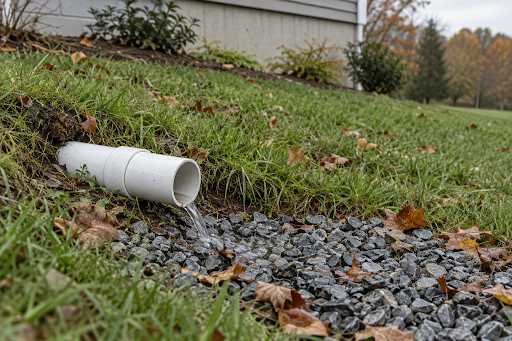
If your sump pump moves water out of your basement only for that water to collect beside the house, the system may not be accomplishing the full job you need it to do. The pump is responsible for moving collected water, but the discharge route determines where that water goes once it leaves your basement.
For homeowners in Southern New Hampshire and Northeast Massachusetts, this becomes especially important during periods of heavy rain, spring snowmelt, saturated ground, and freezing winter conditions. A discharge arrangement that seems acceptable during dry weather may behave very differently when the surrounding soil is already holding water.
At Reliable Basement Waterproofing, we look at the entire water-management route—from collection inside the basement to the location where the discharge ultimately goes outdoors. The appropriate solution depends on your property, existing system, grading, and applicable local requirements.
Start by Understanding What Your Sump Pump Is Doing
A sump pump typically sits in a basin where water collects before being pumped away through a discharge line.
Once that water leaves the pipe, the surrounding property begins to matter.
If the outlet releases water into a low area close to the foundation, some of that water may remain near the house or soak into the surrounding soil. Depending on the site conditions, water may then contribute to the conditions the sump system is trying to manage.
That can create a frustrating situation where the pump appears to be working but water management around the property remains a problem.
Find the Visible Discharge Point
You don’t need to excavate anything to begin evaluating the situation.
From a safely accessible area, locate where the visible sump discharge exits the home and observe where the water appears to travel.
Look for conditions such as:
- Water pooling near the foundation
- Persistently damp soil
- Erosion
- Water crossing a walkway
- Runoff moving toward the house
- Water collecting in a low area
- Visible sagging or damaged pipe sections
- An outlet obstructed by landscaping or debris
Take photographs if you can do so safely.
These observations can provide useful information during an inspection without requiring you to disturb buried or inaccessible parts of the system.
Observe the System During Wet Weather
A sump discharge system may be easier to understand while it’s actively handling water.
If you can safely observe the property during ordinary rain, note where water appears after the pump operates.
You may discover that a location that looks completely dry on a sunny inspection day becomes saturated during heavier weather.
Also pay attention to whether the problem appears primarily during:
- Heavy rain
- Extended periods of rain
- Snowmelt
- Already-saturated ground conditions
- Ordinary weather
Those patterns can help provide context for the inspection.
They shouldn’t be treated as a homeowner diagnosis of the problem, but they can help explain when and how the condition occurs.
Pay Attention to Frequent Pump Cycling
If your sump pump seems to turn on and off repeatedly, mention that during the inspection.
Frequent cycling can occur for different reasons. Groundwater conditions, the amount of water reaching the basin, the discharge arrangement, and other system factors may all deserve consideration.
The sound of the pump alone doesn’t establish why it is cycling frequently.
An inspection can compare what the system is doing inside the basement with what happens at the exterior discharge.
This is another reason to evaluate the complete water-management system instead of looking only at the pump.
Don’t Assume a Longer Pipe Automatically Solves the Problem
If water is collecting too close to the foundation, extending the discharge farther away may seem like the obvious answer.
Distance can matter, but length alone doesn’t determine whether the route is appropriate.
A longer line can still create problems if it:
- Develops low areas that hold water
- Has an unsuitable slope
- Discharges into another poorly drained location
- Directs water toward neighboring property
- Creates runoff across a walkway
- Becomes vulnerable to freezing
- Ends in an area that is already saturated
The complete route and destination need to make sense for the property.
Consider the Grade Around Your Home
The surrounding landscape influences what happens after sump water is discharged.
A suitable route should account for how water naturally moves across the property.
Look at the general slope near the house and where low areas exist.
Water discharged away from the foundation can still become a problem if the surrounding grade directs it back toward the building.
Site-specific conditions are why a discharge arrangement that works for one home shouldn’t automatically be copied at another.
Soil and Drainage Conditions Matter
Properties can handle discharged water differently depending on soil and drainage conditions.
An area that readily handles water during normal conditions may behave differently when the ground is already saturated.
That means the destination needs to be evaluated in the context of the actual property rather than assuming any grassy location will work.
An inspection can help identify which site conditions should be considered before changes are made.
Check Local Requirements Before Changing Connections
There isn’t one universal sump pump discharge arrangement that applies to every home in Nashua, Manchester, Haverhill, or the surrounding communities.
Local requirements may affect where sump water can be directed and whether particular connections are permitted.
Don’t assume an existing connection is acceptable simply because it was present when you purchased the home.
Likewise, don’t copy a neighbor’s arrangement without confirming that the same approach is appropriate for your property.
Before changing a connection, the applicable local requirements should be identified with the department responsible for drainage, plumbing, or the relevant municipal system.
Keep Neighboring Properties in Mind
Moving water away from your own foundation shouldn’t simply transfer the problem somewhere else.
The discharge route should account for property boundaries and surrounding areas.
A poorly selected outlet may send runoff toward a neighbor’s property or another location where water creates problems.
Discuss the intended destination before installation so you understand where the discharged water is expected to go during wet conditions.
Consider Walkways and Driveways
Water discharged across a walkway or driveway can create additional concerns, particularly as temperatures fall.
During mild weather, runoff may simply be inconvenient.
During freezing conditions, that same water may contribute to ice where people walk or vehicles travel.
When evaluating the route, consider sidewalks, steps, driveways, entrances, and other regularly used areas.
A discharge plan should manage basement water without unnecessarily creating another problem elsewhere on the property.
Plan for New England Freezing Conditions
A discharge arrangement that works during warmer weather can behave differently when temperatures drop.
Water remaining inside an exposed section of pipe can freeze. Snow and ice can also obstruct an outlet.
A blocked discharge route can interfere with the system even when the sump pump itself is operating.
Before winter, the route deserves attention for:
- Slope
- Low sections
- Pipe condition
- Exposure
- Outlet location
- Potential snow or ice obstruction
- Any freeze-protection feature intended for the system
The appropriate arrangement depends on the particular installation.
Don’t Make Seasonal Changes Without Understanding the System
Homeowners sometimes remove, shorten, add, or reposition discharge hoses seasonally.
A change that seems minor can affect where water collects, how the pipe drains, and whether the outlet creates another problem.
Before changing the arrangement, understand what the existing components are intended to do.
If the system includes a freeze-protection feature or another specialized component, keep the manufacturer’s instructions and system design in the conversation.
Avoid improvising a winter configuration based only on what looks convenient.
Know the Warning Signs of a Discharge Problem
Changes in system behavior deserve attention.
Contact a professional if you notice conditions such as:
- New pooling near the foundation
- Water appearing where it didn’t previously
- Significant erosion near the outlet
- A pump cycling differently than usual
- Unusual pump sounds
- A pump running without visible discharge
- A visibly damaged discharge line
- An outlet obstructed by ice, snow, or debris
- Water crossing a regularly used walking area
These signs don’t necessarily identify the cause by themselves.
They do provide useful reasons to have the system evaluated.
Be Careful Around Water and Electrical Equipment
Sump systems involve both water and electrical equipment, so some situations shouldn’t become DIY troubleshooting projects.
Don’t open electrical equipment or attempt to thaw frozen piping with an open flame.
If standing water may be in contact with electrical equipment or you believe the water could be energized, stay out of the affected area and seek appropriate emergency assistance.
Your safety comes before diagnosing why the pump isn’t operating as expected.
Keep Discharge Planning Connected to the Whole Waterproofing System
The discharge line is one part of a larger basement water-management system.
Depending on the home, that system may involve:
- Drainage collection
- Sump basin
- Pump
- Controls
- Alarm or backup components
- Discharge piping
- Exterior outlet
These pieces need to work together.
Replacing a pump doesn’t automatically correct an unsuitable exterior discharge route. Likewise, extending an exterior pipe won’t correct every problem involving water collection or pump operation inside the basement.
Evaluating the system as a whole helps avoid treating one visible component as though it operates independently.
Include Maintenance in Your Planning
A sump pump shouldn’t disappear from your attention after installation.
Ask what maintenance and inspection are appropriate for your particular system.
The discharge route can also change over time.
Landscaping may grow around an outlet. Soil can settle. Exterior components may move or become damaged. Debris, snow, or ice may affect the discharge area.
Periodic review can help identify those changes before you’re relying on the system during severe weather.
Reliable Basement Waterproofing’s sump pump systems and annual maintenance services can address the system as a whole, including systems Reliable didn’t originally install.
Bring Useful Information to Your Inspection
You don’t need to diagnose the problem yourself before calling.
A few observations can make the inspection more useful.
From safely accessible areas, note:
- Where the visible discharge pipe exits the home
- Where water appears after the pump runs
- Areas where water pools after rain
- Whether runoff crosses a driveway, walkway, or steps
- Visible loose connections
- Sagging or damaged pipe sections
- Changes in pump sounds
- Changes in pump cycling
- Alarm activity
- Previous discharge repairs
- Available manufacturer or system information
Photos taken during wet weather can be especially useful if conditions are dry when the inspection occurs.
Leave buried, covered, electrical, or otherwise hazardous components alone.
Ask Where the Proposed Discharge Will End
When comparing recommendations, don’t stop at how the pipe will leave the house.
Ask where the water is ultimately intended to go.
You should understand the proposed route and destination.
Questions might include:
- Where will the discharge terminate?
- How does the route account for the property’s slope?
- What happens when the ground is already wet?
- How are freezing conditions considered?
- Will the route affect walkways or driveways?
- Are municipal requirements relevant?
- What maintenance will the route require?
- What should I watch for after installation?
Those answers can make it easier to compare proposals that might otherwise sound similar.
Frequently Asked Questions
How far should sump pump water discharge from my house?
There isn’t one distance that’s appropriate for every property. The route depends on grading, soil, available space, drainage conditions, the discharge destination, and applicable local requirements. The important question is whether the water is being directed to a suitable location rather than simply choosing a universal number.
Why does my sump pump keep running after it rains?
Frequent cycling can have several possible causes, including groundwater conditions, the amount of water entering the system, or issues involving the discharge arrangement. The cycling pattern alone doesn’t establish the cause, so the system should be evaluated as a whole.
Can a sump pump discharge line freeze?
Exposed piping, retained water, low sections, snow, ice, and other winter conditions can affect a discharge route. The system should be evaluated for its specific configuration and any freeze-protection features intended for it.
Can I connect my sump pump discharge to a municipal drain?
Don’t assume a particular municipal connection is permitted. Requirements can vary by community and system. Confirm the applicable rules with the local authority responsible for drainage or plumbing before changing a connection.
What should I do if my sump pump is running but I don’t see water coming out?
A change in discharge behavior is a reason to arrange an assessment. Don’t open electrical equipment or use unsafe methods to investigate frozen or blocked components. If standing water may be energized, stay out of the area and seek appropriate emergency assistance.
Plan the Entire Sump Pump Discharge Route
A sump pump’s job isn’t complete simply because water leaves the basement.
That water needs an appropriate route and destination that account for the foundation, property slope, soil and drainage conditions, neighboring areas, walkways, local requirements, and New England’s freezing weather.
If you’re seeing pooling near the house, unusual pump cycling, erosion, or other changes, document what you can safely observe and have the complete system evaluated.
Reliable Basement Waterproofing can review the collection, pump, controls, and discharge as parts of one water-management system rather than focusing only on the visible exterior pipe.
If you’re unsure where your sump water should go, call Reliable Basement Waterproofing at (603) 382-6911 to book a free inspection. We’ll review what’s happening at your home, explain the available options, and provide a clear quote for recommended work.
Serving Southern New Hampshire and Northeast Massachusetts.
